Data notes (9)
Data notes
Editorial: the year of death: We date the end to 1982, when General Foods completed the sale and Hardee’s began converting the restaurants, because that is when Burger Chef stopped being run as a chain.310 A single franchise in Cookeville, Tennessee kept the name until 1996, which other sources use as the end date.4 The exact closing date of the sale is unknown to us; the agreement was reported on December 10, 1981.
Editorial: the tier: Dead. No restaurant operates under the name. Hardee’s has kept the trademark registered and used it for limited Big Shef promotions (2007 and 2014 documented; 2001 reported by one source).81112 We did not check the current status of the registrations after the 2009 filing.14
Ranges where sources differ: Purchase price in 1968: $16M (New York Times, Indianapolis Star), $16.5M, nearly $20M, $25M.15796 Units at the purchase: 650, about 700, over 730, nearly 900.7169 Year of purchase: 1968 in most sources, 1967 in the Indianapolis Star, which may refer to the announcement.7 Peak: 1,200 in 1971 (Time), 1,200 in 1972 (Indiana Historical Bureau), “over 1,200” (Business Journal); the Times’ 1,200 counts Burger Chef and Rix together.4861 Units at the 1981–82 sale: 650, 679, “just over half” of 1,200.694 Sale price: about $44M (Times), $43M (Business Journal).36 Restaurants in 1959: eight or more than 40.57 First restaurant: May 1957 pilot stand or spring 1958 on West 16th Street.75 Big Shef: 1964 or 1965.87 Star Wars Funmeal: 1978 on the surviving boxes; the museum text and some uploaders say 1977.19
Derived figures: Loss as a multiple of purchase price: $83M ÷ $16M = 5.2.1 McDonald’s 1971 count of 1,300 = Burger Chef’s 1,200 plus the “100 fewer” in Time.4 The compare block spans 2009 − 1967 = 42 years.
Retrospective figures: Every unit count except those in the 1972 and 1981 Times articles comes from a later history or retrospective, not a contemporary document. The $129,000 investment and 50% return are from the Encyclopedia of Indianapolis.5 Rival counts are from the International Directory of Company Histories.202122
Unverified or single-source claims: The outcome of the 1979 suit against McDonald’s (said to have been dismissed) is unverified; no court record was found.18 The flame broiler patent is asserted by local histories; the patent number was not located.6 The franchisee lawsuit said to explain the Cookeville restaurant’s survival, the four logos of the 1970s, CKE’s 1997 purchase of Hardee’s and Frank Thomas Jr.’s death in 2007 rest on Lost Indiana alone.9 The 2001 Big Shef promotion rests on the Indiana Historical Bureau alone.8
Unknown: Burger Chef’s annual sales, profits, sales per restaurant, advertising spend after 1968 and the split between company-owned and franchised restaurants before 1982 were not found in any source we could open. The 1975 withdrawal from Australia and the 1967 Wall Street Journal report of the General Foods deal are cited elsewhere but could not be opened, so they are left out.
General knowledge: General Foods made Maxwell House coffee and Jell-O; Imasco was a Montreal tobacco and consumer company; CKE Restaurants owns Carl’s Jr. and Hardee’s.
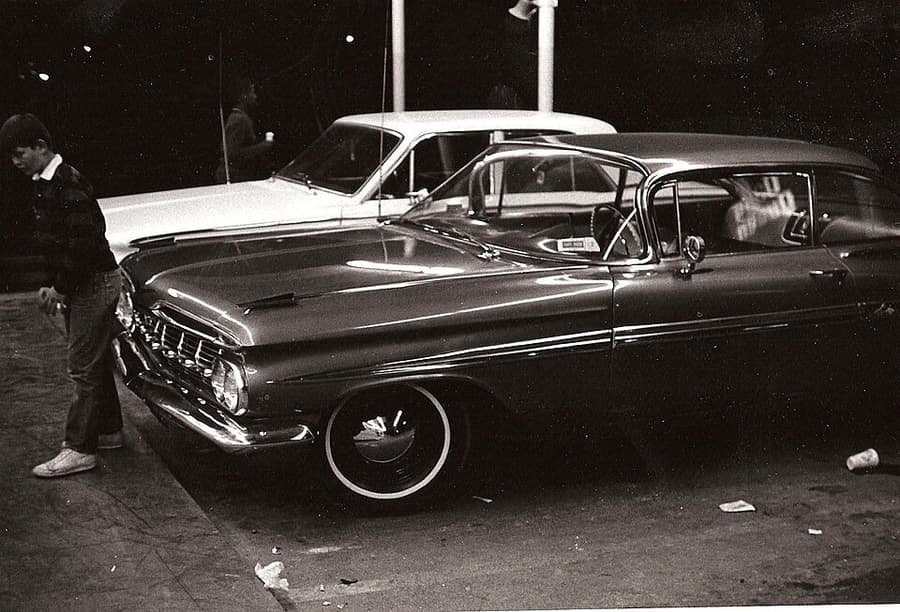
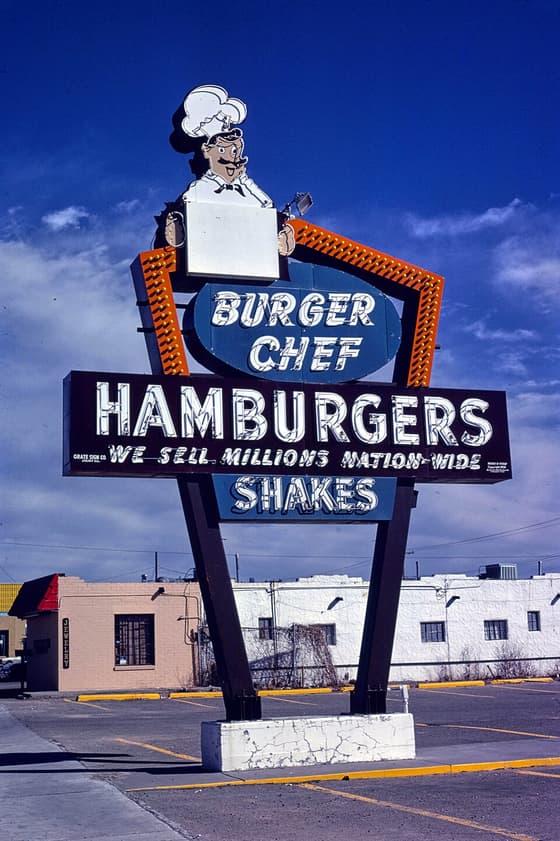
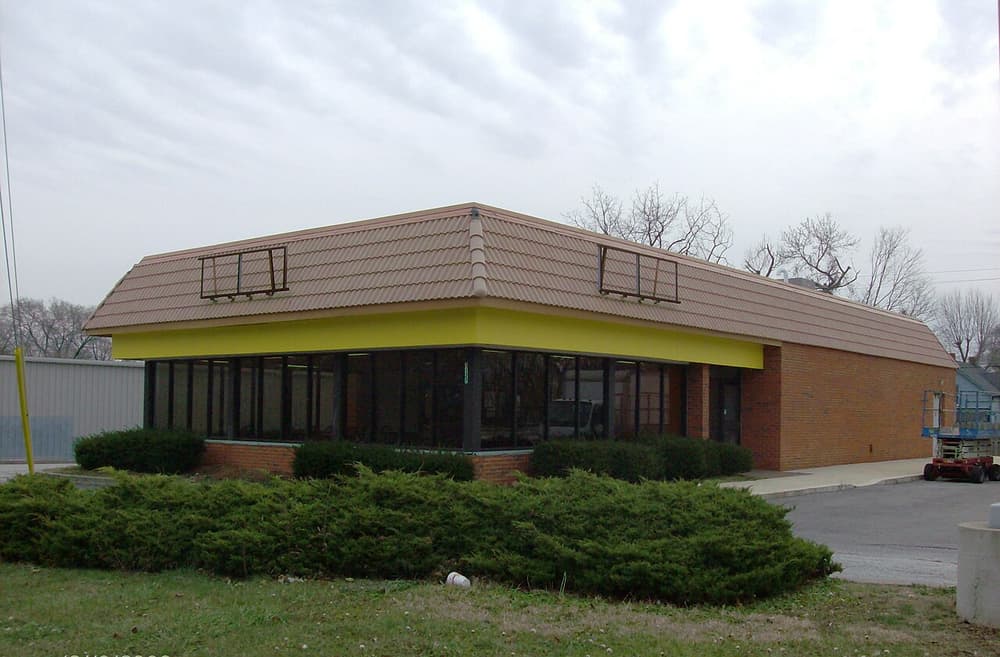
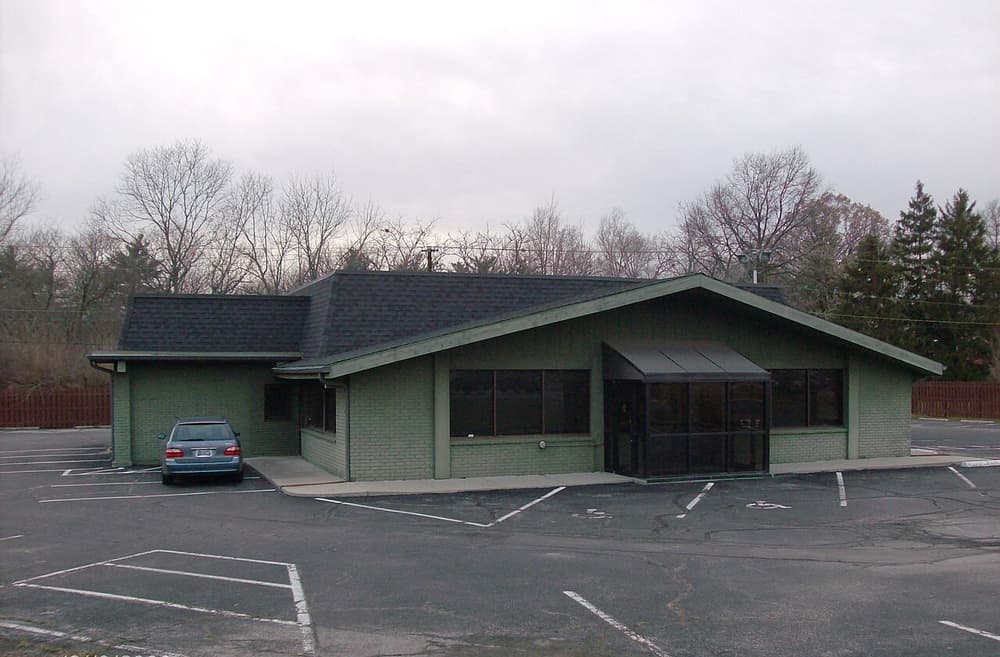
Images and drawings: Photographs are from Wikimedia Commons and the Library of Congress under the licenses stated beside each one.2324 The four drawings are original illustrations made for this page. The mascots Burger Chef and Jeff are not reproduced.