Spectre Brands

GhostMall toy stores · Pittsfield, Massachusetts

KB Toys

Founded Apr 1, 1922. Filed for its second Chapter 11 on Dec 11, 2008 and closed its stores in early 2009.

For three decades it was the toy store you walked past on the way to somewhere else. Then the shoppers stopped walking past.

Why ghost: The store chain was liquidated after its second bankruptcy in December 2008, but the name is in use again: a small online business, KBToysverse, sells new KB Toys collectibles under what it describes as a license from the brand’s owners.2434

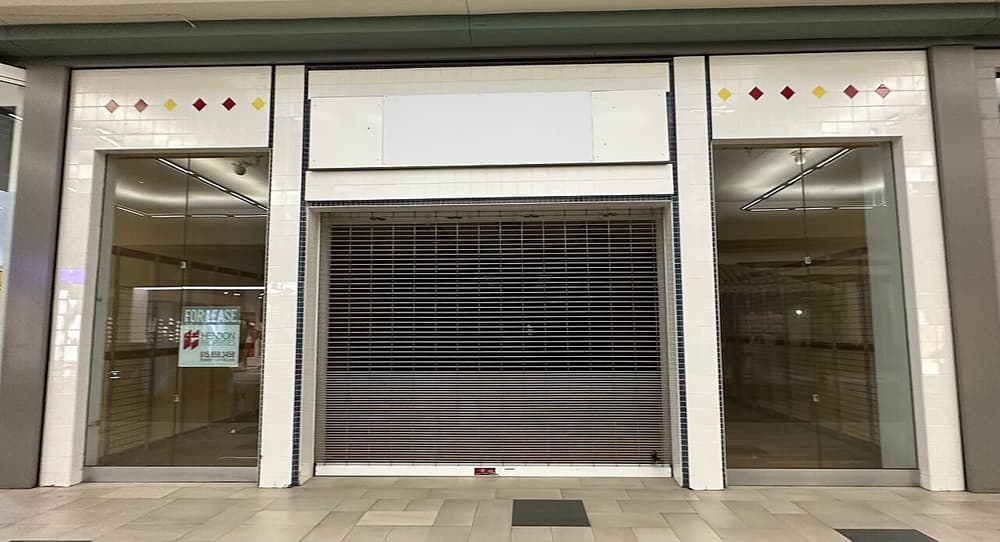
KB Toys archive image: A former KB Toys storefront at Rivergate Mall, Goodlettsville, Tennessee, gate down and sign removed, as described by the photographer.
After closure A former KB Toys storefront at Rivergate Mall, Goodlettsville, Tennessee, gate down and sign removed, as described by the photographer.Photo: Larry Hachucka, via Wikimedia Commons, CC BY-SA 4.0.
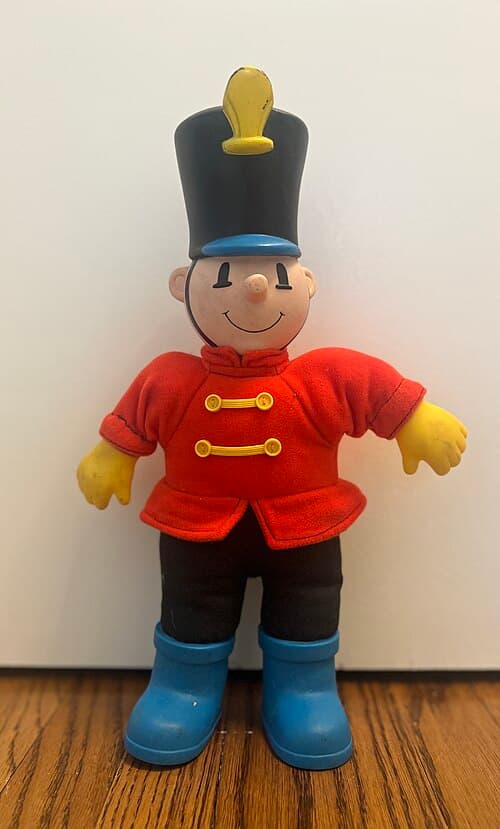
KB Toys archive image: The Kay-Bee toy soldier
The Kay-Bee toy soldierPhoto: Wikicontributor135, via Wikimedia Commons, CC0.
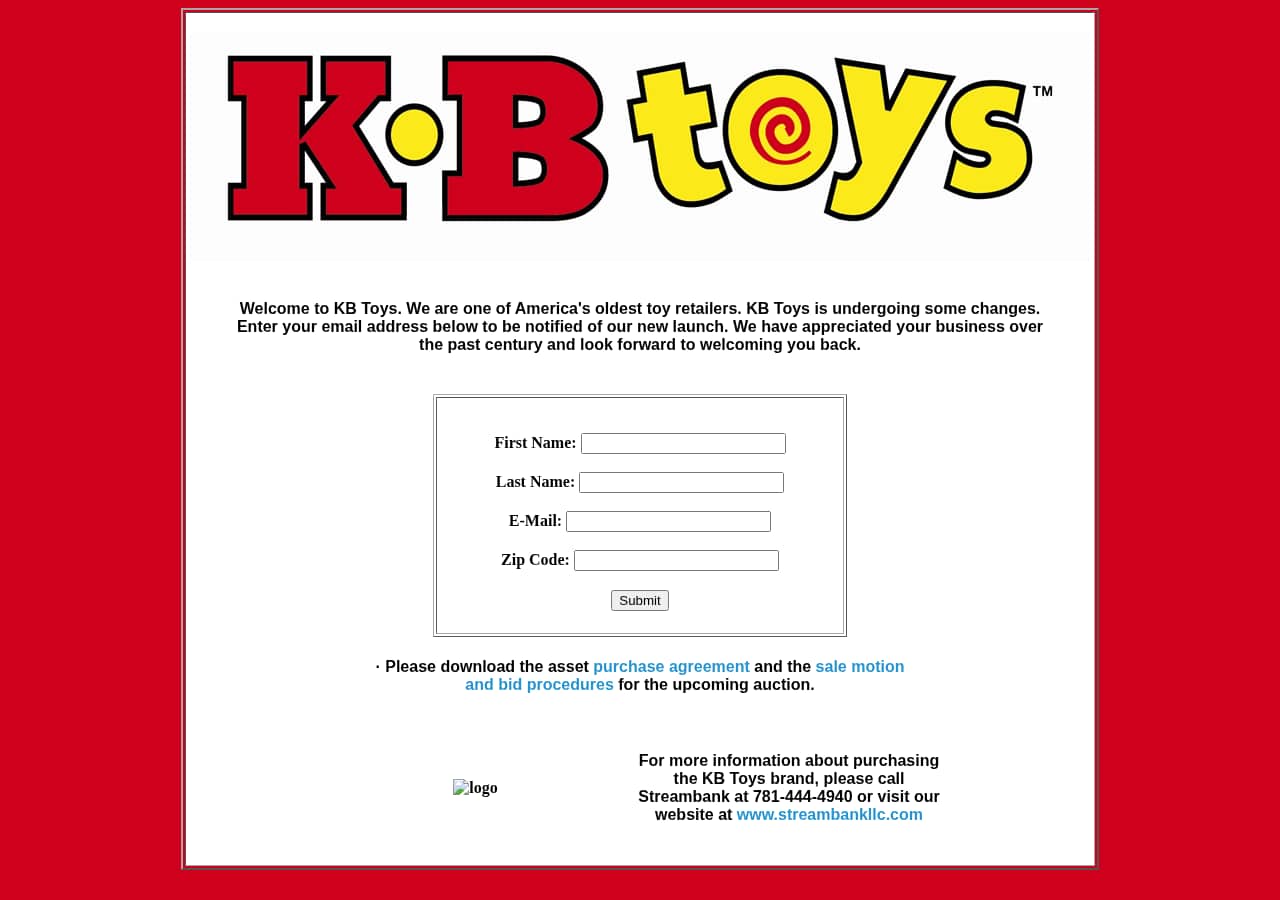
KB Toys archive image: The name at auction, Aug 2009
The name at auction, Aug 2009
KB Toys archive image: The last logo
The last logoCropped from an Internet Archive capture of kbtoys.com dated Aug 1, 2009. Shown for commentary; trademarks belong to their owners.

KB Toys began as a candy wholesaler in Pittsfield, Massachusetts, and became the largest mall-based toy chain in the United States. It was sold three times in twenty years, the last time in a leveraged buyout that paid its owners about $120 million before a price war with Walmart and Target sent it into bankruptcy. This is the full post-mortem, built from the SEC filings of the company that owned it, a Delaware court opinion, contemporary press and the archived website.

The company in four numbers

1,322
toy stores on January 30, 1999, the highest year-end count in the filings3
$18.1M
of cash put down by Bain Capital in the December 2000 buyout, as reported by Forbes17
$120M
approximately, distributed to the buyout sponsor, executives and others in 20027
461
stores left to liquidate in December 2008, including 30 temporary holiday stores (derived sum)24

Key findings

  1. Its public owner took a large loss to be rid of it. Consolidated Stores bought Kay-Bee in 1996 for about $315M and sold it in 2000 for gross proceeds of about $305M, recording a $430.8M after-tax loss on disposal of the toy segment.15
  2. The buyout was almost all borrowed money. Forbes reported that Bain put down $18.1M in cash and that KB borrowed about $237M. Sixteen months later KB borrowed again to fund an $85M payment to Bain.17
  3. No court ruled that the dividend killed it. A Delaware judge dismissed the seller’s lawsuit in 2006, and the creditors’ case was settled on terms that were not disclosed.72528
  4. The price war did the visible damage. Sales at stores open at least a year fell 10% in 2003 while discounters cut average toy prices by 8%, and KB skipped vendor payments that December.18
  5. It failed again without the buyout debt. Under a new owner and with fewer than half the stores, comparable sales fell 20% between October 5 and December 8, 2008, and the chain chose to liquidate.23

The story

The toy store in the mall, and what happened when the mall emptied

KB Toys was built on shoppers who had come to the mall for something else. It worked for thirty years. Then the discounters cut toy prices below cost, the malls lost their traffic, and a buyout had already taken the spare cash out.

Chapter 1 of 6

26

retail stores in 1973, when the family gave up wholesaling

A doll of the Kay-Bee toy soldier mascot in a tall black hat, red coat and blue boots
A Kay-Bee toy soldier mascot doll. Photo: Wikicontributor135, via Wikimedia Commons, CC0.

1922 – 1981 · Pittsfield

Two brothers, candy first

Kaufman Brothers was founded as a candy company in Pittsfield, Massachusetts, on April 1, 1922, by Harry and Joseph Kaufman.35 When sugar became scarce during the Second World War the brothers began to move into toys, and in time they dropped confectionery altogether.35 A reference history says the toy business came to them as payment for a customer’s debt, and that by 1948 it was the larger of the two.36

The company wholesaled toys until 1973, when it stopped to concentrate on its 26 retail stores, trading as Kay-Bee Toy & Hobby. It had 65 stores three years later and 210 by 1981.36 The name was the founders’ initials. The idea was the suburban mall: a small shop in the path of people who had come to buy something else.36

Chapter 2 of 6

1,042

Kay-Bee stores on May 5, 1996, in all 50 states and Puerto Rico

Commercial · 1985Kay-Bee Toy Stores holiday commercial A thirty-second holiday spot from the Melville years. The uploader says it aired on December 8, 1985; we could not confirm the date independently. Watch on YouTube

1981 – 1996 · Melville

A thousand small stores

Melville Corporation, a specialty retail group, bought Kay-Bee in 1981. The reference history puts the price at $64.2 million and calls it the largest purchase Melville had made to that point.36 Kay-Bee grew by buying other chains. In 1990 Melville agreed to buy Circus World, which ran 330 toy stores in 32 states and had sales of $177.6 million the year before, and folded it into the Kay-Bee division.9

The formula was to stack discontinued toys bought cheaply from manufacturers at the front of the store to pull mall traffic in, then sell regular lines further back.36 It had limits. Kay-Bee closed nearly 250 weaker stores in 1993 and 1994, and by 1995 Walmart, Kmart and Target together had about 40 percent of the U.S. toy market, according to the same history.36 Melville planned to spin the chain off, then sold it instead.8

Chapter 3 of 6

$315M

initial price paid to Melville in 1996: $215M in cash and $100M of notes

Commercial · 1999Five KBkids.com holiday commercials Five thirty-second spots for the new website, dated 1999 by the uploader. KBkids.com spent $58.7 million on sales and marketing between June 25 and December 31, 1999.4 Watch on YouTube

1996 – 2000 · Consolidated Stores

A closeout company buys a toy chain

Consolidated Stores, the Ohio owner of Odd Lots and Big Lots, bought Kay-Bee effective May 5, 1996.1 It shortened the name to KB and pushed more closeout merchandise through the stores. Sales at its toy stores rose from $1.56 billion in fiscal 1997 to $1.74 billion in fiscal 1999, and the store count peaked at 1,322 in January 1999.234

The trouble was profit. Operating profit in toys fell from $101.0 million in fiscal 1997 to $46.5 million a year later.4 In June 1999 Consolidated put $80 million into KBkids.com, a web joint venture with BrainPlay.com.4 In its first six months the site spent $58.7 million on sales and marketing and took in $26.2 million of sales.4 A planned $210 million IPO of the site was withdrawn in June 2000.13 Two weeks later Consolidated said it would sell the whole toy division.5

Chapter 4 of 6

$85M

paid to Bain Capital in April 2002, as reported by Forbes from court documents

The closeout bin at the front of the store was the formula. Original illustration.

2000 – 2004 · Bain Capital

The buyout, the dividend and the price war

The sale closed on December 7, 2000, to an affiliate of Bain Capital working with KB’s management. Consolidated reported gross proceeds of about $305 million: $258 million in cash, a note with a face value of $45 million and a warrant. It booked a $430.8 million after-tax loss on the disposal.5 Forbes later reported that Bain put down $18.1 million in cash and that KB borrowed about $237 million.17

In April 2002 KB borrowed $66 million more to fund an $85 million payment to Bain. The chief executive, Michael Glazer, received $18 million.17 A Delaware court later put the total distributed at approximately $120 million.7 Bain said the company was left with ample working capital.17

Then came Christmas 2003. Discount chains sold some of the season’s most wanted toys below wholesale cost, in what USA Today called a price war among Walmart, Target and Toys “R” Us.1918 KB’s sales at stores open at least a year fell 10 percent, and it skipped vendor payments in December.18 It filed for Chapter 11 on January 14, 2004.6

Chapter 5 of 6

−20%

change in comparable-store sales, Oct 5 to Dec 8, 2008, from the bankruptcy filing

A mall storefront after the liquidation sale. Original illustration.

2004 – 2009 · The second failure

Half the stores, then none

KB closed more than 600 stores and laid off 3,400 people in its first bankruptcy.24 It announced on August 30, 2005 that it had emerged, with 640 stores and a new majority owner, an affiliate of Prentice Capital Management, which paid $20 million for 90 percent of the stock.2021 Bain’s debt was gone. The format was the same.

In November 2007 the Washington Post reported that 156 more stores were marked for closure, and quoted a retail researcher: “I just think that KB Toys is in a death spiral.”22 A year later the recession arrived in the middle of the holiday season. KB filed again on December 11, 2008, this time to liquidate: 277 mall stores, 114 outlets, 40 KB Toy Works stores and 30 holiday stores.24 By February 2009 the remaining employees had been let go.26

Chapter 6 of 6

$2.1M

reported price Toys “R” Us paid for the name, logo and web addresses in 2009

The KB Toys logo above a notice that the brand is for sale through Streambank
kbtoys.com in August 2009, with the brand up for auction.37

2009 – 2026 · The name

A brand without a store

By the summer of 2009 the website carried a notice that the brand was for sale.37 Toys “R” Us bought it that September through a subsidiary, for a reported $2.1 million, and redirected KBToys.com to one of its own sites.2930 It let the trademark registration expire in June 2016. Strategic Marks, a California company that collects lapsed brand names, registered it that December.30

When Toys “R” Us itself collapsed in March 2018, Strategic Marks announced 1,000 KB Toys pop-up stores for that Christmas.31 None opened. The founder said toy makers and mall owners would not invest.33 Today the name is used by KBToysverse, an online shop run by two former KB store employees, which sells collectible miniature shopping buckets and says it holds a license from the brand’s owners.34

Timeline

Eighty-seven years, 30 moments

From a candy wholesaler in the Berkshires to a trademark that has changed hands three times since the stores closed. Filter by thread.

All 30 events as a list
  1. Apr 11922
    Corporate

    Kaufman Brothers founded

    Harry and Joseph Kaufman start a candy company in Pittsfield, Massachusetts.35

  2. 1940s
    Corporate

    From candy to toys

    With sugar scarce in wartime, the brothers begin to switch to toys, and later drop confectionery.3536

  3. 1973
    Corporate

    Wholesaling ends

    The company gives up wholesale to run its 26 retail stores as Kay-Bee Toy & Hobby.36

  4. 1981
    Money

    Sold to Melville Corporation

    Kay-Bee has 210 stores. A reference history gives the price as $64.2 million.3635

  5. Jul 1990
    Corporate

    Melville buys Circus World

    The 330-store chain, with 1989 sales of $177.6 million, is to become part of the Kay-Bee division.9

  6. 1993 – 94
    Corporate

    Nearly 250 stores closed

    A restructuring closes weaker stores. In 1994 Kay-Bee starts larger Toy Works stores outside malls.36

  7. Mar 251996
    Money

    Melville agrees to sell

    Consolidated Stores will pay $315 million: $215 million in cash and a $100 million note.8

  8. May 51996
    Corporate

    Consolidated takes over

    The acquisition is effective. Kay-Bee operates 1,042 stores. A later adjustment cuts the cash paid to $185.3 million.1

  9. Jan 301999
    Corporate

    The peak: 1,322 stores

    974 of them are in enclosed malls. Fiscal 1998 toy sales are $1,643.0 million, with comparable sales down 0.2%.3

  10. May 191999
    Online

    The BrainPlay deal

    Consolidated says it will invest $80 million in a web venture with BrainPlay.com and own 80% of it.10

  11. Jun 251999
    Online

    KBkids.com LLC formed

    Consolidated contributes $80 million of cash and intangibles valued at $4 million.4

  12. Jul 1999
    Money

    A profit warning

    Consolidated warns of a quarterly loss, citing slow video game sales at KB. Its shares fall nearly 30% in a day.11

  13. Jan 272000
    Online

    KBkids.com files to go public

    The planned offering is $210 million, under the symbol KBKD.413

  14. May 2000
    Online

    The web chief is fired

    Consolidated dismisses the head of KBkids.com and 50 of the unit’s other 150 employees.12

  15. Jun 132000
    Online

    IPO withdrawn

    KBkids.com pulls the $210 million offering.13

  16. Jun 272000
    Corporate

    The toy division is put up for sale

    Consolidated announces it will separate its toy and closeout businesses.5

  17. Dec 72000
    Money

    Sold to Bain Capital and management

    Gross proceeds are about $305 million. Consolidated records a $430.8 million after-tax loss on disposal.514

  18. Apr 2001
    Online

    eToys inventory bought

    KB agrees to pay about $5.4 million for inventory of the bankrupt web retailer eToys.16

  19. Sep 2001
    Corporate

    KB Toys at Sears

    Sears says it will test holiday toy shops run with KB in 29 department stores.39

  20. Apr 2002
    Money

    The recapitalization

    KB takes on $66 million of bank loans to fund an $85 million payment to Bain, as reported by Forbes. A court later describes about $120 million distributed in all.177

  21. Dec 2003
    Rivals & market

    The holiday price war

    Discounters sell hot toys below wholesale cost. KB’s comparable sales fall 10% for the year. FAO Inc. files for Chapter 11.1819

  22. Jan 142004
    Bankruptcy & after

    First Chapter 11

    KB files for bankruptcy protection. USA Today counts 1,217 stores.618

  23. Jan 282004
    Bankruptcy & after

    At least 375 stores to close

    KB says it will cut 3,500 jobs. Clearance sales begin at the first 356 stores.19

  24. Aug 302005
    Bankruptcy & after

    Out of bankruptcy

    KB announces it has emerged, with 640 stores, a Prentice Capital affiliate as majority owner and Gregory Staley as chief executive.2120

  25. Mar 282006
    Money

    The seller’s lawsuit is dismissed

    A Delaware judge dismisses all counts of Big Lots’ suit against Bain and former KB executives.738

  26. Nov 2007
    Bankruptcy & after

    156 more stores targeted

    The Washington Post reports the closures from internal documents. KB has fewer than 600 stores.22

  27. Dec 112008
    Bankruptcy & after

    Second Chapter 11, to liquidate

    Comparable sales are down 20% since October 5. Going-out-of-business sales start at once.2324

  28. Sep 2009
    Bankruptcy & after

    Toys “R” Us buys the name

    The brand, KBToys.com and trademarks go to a Toys “R” Us subsidiary. No stores are included.29

  29. 2016
    Bankruptcy & after

    The trademark lapses and is re-registered

    Toys “R” Us lets the registration expire in June. Strategic Marks picks it up in December.30

  30. Mar 2018
    Bankruptcy & after

    A comeback is announced

    Strategic Marks plans 1,000 pop-up stores for the holidays. By March 2019 none had opened.3133

Part 2 of 6

Business

The numbers · Rivals

The money

A thousand stores, three owners and one large dividend

For four years KB’s numbers were public, inside the annual reports of Consolidated Stores. They show sales that kept growing and profit that did not. After the December 2000 buyout the company was private, and the figures come from court records and the press.

Stores, from 26 to 1,322 to none

Stores at each date we could source. The points are not evenly spaced in time.

05001,0001,50019731981Jan 1997Jan 1999Jan 2004200912345605001,0001,5001973May 1996Jan 19992009123456
  1. 1981 · Sold to Melville The Kaufman family sells a 210-store chain in 1981.36
  2. May 1996 · Sold to Consolidated Stores 1,042 Kay-Bee stores change hands on May 5, 1996.1
  3. Jan 1999 · The peak 1,322 toy stores on January 30, 1999, 974 of them in enclosed malls.3
  4. Jan 2004 · First Chapter 11 Filed January 14, 2004, with 1,217 stores by USA Today’s count.18
  5. Aug 2005 · A second start Out of bankruptcy in August 2005 with 640 stores.21
  6. Dec 2008 · Liquidation 461 stores, 30 of them temporary, when it filed again on December 11, 2008.24
Data table
Stores, from 26 to 1,322 to none
Date of countStores
197326
197665
1981210
May 19961,042
Jan 19971,184
Jan 19981,249
Jan 19991,322
Jan 20001,320
Jan 20041,217
Aug 2005640
Dec 2008461
20090
1973–1981 from a reference history36. May 1996 to January 2000 from Consolidated Stores 10-Ks, which count all of its toy stores, including closeout toy chains it owned before Kay-Bee1234. January 200418, August 200521, December 2008 (derived sum of four formats)24. The stores were closed in early 200926.

Toy store sales under Consolidated

Net sales of the Toy Stores segment, $ millions. Fiscal 1996 includes Kay-Bee only from May 5.

Data table
Toy store sales under Consolidated
PeriodToy Stores net sales ($M)
FY1996$1178.2M
FY1997$1562.5M
FY1998$1643M
FY1999$1740.4M
Consolidated Stores 10-Ks for fiscal 1996 to 19991234. Fiscal years end around January 31 of the following calendar year. KBkids.com added $26.2M in fiscal 1999 and is not included.4

Profit went the other way

Operating profit by business group, $ millions.

Data table
Profit went the other way
PeriodToy storesKBkids.com
FY1997$101Mn/a
FY1998$46.5Mn/a
FY1999$70.4M$-69.6M
Business group table in the fiscal 1999 10-K4. KBkids.com was formed on June 25, 1999, so it has one year of results.

What Consolidated got for it

$315M
initial purchase price in 1996, later reduced by a $29.7M adjustment to the cash portion1
$305M
approximate gross proceeds of the sale in December 2000: $258M cash, a $45M note and a warrant5
$430.8M
after-tax loss on disposal of the toy segment recorded in fiscal 20005
$13.2M
what the seller judged the $45M note to be worth on the day it received it6

How a $300 million purchase was paid for

The December 2000 buyout, as reported by Forbes in 2005. $ millions.

$300.0M purchase price as reported by Forbes. The seller’s 10-K gives gross proceeds of about $305M including a warrant
$237.0M 79%Borrowed by KB from banks$45.0M 15%Note given to the seller$18.1M 6%Cash from Bain Capital$237.0M 79%Borrowed by KB from banks$45.0M 15%Note given to the seller$18.1M 6%Cash from Bain Capital
  • Borrowed by KB from banks. “$237 million or so from a consortium led by Bank of America’s Fleet unit.”17
  • Note given to the seller. A pay-in-kind note due in December 2010, issued by a holding company with no assets but stock.7
  • Cash from Bain Capital. The sponsor’s cash, as reported by Forbes.17
Data table
How a $300 million purchase was paid for
Where it wentAmountShareNote
Borrowed by KB from banks$237.0M79%“$237 million or so from a consortium led by Bank of America’s Fleet unit.”
Note given to the seller$45.0M15%A pay-in-kind note due in December 2010, issued by a holding company with no assets but stock.
Cash from Bain Capital$18.1M6%The sponsor’s cash, as reported by Forbes.
Forbes, April 18, 200517. Press-reported figures for a private transaction. The parts sum to $300.1M against a rounded $300M price (the $0.1M difference is derived). Structure of the note from the Delaware court opinion7.

Who received the 2002 distribution

April 2002, sixteen months after the buyout. $ millions, as reported.

Bain Capital
$85M
Funded in part by $66M of new bank loans.17
Michael Glazer, chief executive
$18M
He also had $2M of debt owed to KB cancelled.17
Other executives
$16M
Split among them.17
Others (derived remainder)
$1M
The court opinion gives approximately $120M in total.7 Big Lots received $1.95M for its warrants.7
Data table
Who received the 2002 distribution
RecipientAmountNote
Bain Capital$85MFunded in part by $66M of new bank loans.
Michael Glazer, chief executive$18MHe also had $2M of debt owed to KB cancelled.
Other executives$16MSplit among them.
Others (derived remainder)$1MThe court opinion gives approximately $120M in total. Big Lots received $1.95M for its warrants.
Forbes, citing court documents17, and the Delaware Court of Chancery’s summary of the complaint7. Bain told Forbes the company had $110M of working capital after the transaction. These amounts were alleged in litigation that was dismissed or settled; no court made findings on them.

Where the stores were

Share of 1,320 toy stores on January 29, 2000.

  1. 71%Enclosed shopping malls943 stores, averaging about 3,315 selling square feet.4
  2. 29%Strip centers and outlet mallsThe other 377 stores (derived).
Data table
Where the stores were
LocationShare of stores
Enclosed shopping malls71%
Strip centers and outlet malls29%
Fiscal 1999 10-K4. Percentages are derived: 943 ÷ 1,320 = 71%.

What was left to liquidate

Stores by format at the second bankruptcy filing, December 11, 2008.

KB Toys mall stores
277
KB Toy Outlet
114
KB Toy Works
40
Temporary holiday stores
30
Data table
What was left to liquidate
FormatStoresNote
KB Toys mall stores277
KB Toy Outlet114
KB Toy Works40
Temporary holiday stores30
The Berkshire Eagle, December 12, 2008, from the court filing24. The total of 461 is derived.

Not shown: any income statement or balance sheet for KB Toys after 2000. The company was private and none was published. Sales of $1.4B at the time of the buyout and $1.5B at the 2004 filing are press figures.1718

The rivals

The specialists lost. The discounters did not.

In 2001 KB had about 6% of a $30 billion U.S. toy retail market.15 Every company on this page that sold mainly toys has since gone through bankruptcy. The two that sold toys as one aisle among many are still open.

Who sold America its toys, and what became of them

One figure for each, from the period when KB was failing.

KB Toys

Ghost
6% → under 2% Share of U.S. toy retail in 2001, as reported by the Associated Press, and an analyst’s estimate in 2008.1523 Liquidated in 2008–09.

Walmart

Survived
about 26% Share of the U.S. toy market in 2007, a consultant’s estimate. By then it was the top U.S. toy seller.22

Toys “R” Us

U.S. chain liquidated, 2018
735 stores Taken private for $6.6B in 2005 by a group that included Bain Capital.21 Said in March 2018 that it expected to close all 735 U.S. stores.31

FAO Inc.

Bankrupt, Dec 2003
3 chains The parent of FAO Schwarz, Zany Brainy and The Right Start filed for Chapter 11 about a month before KB.18

eToys

Bankrupt, 2001
$285M of debts The web toy retailer, founded in 1996, never made a profit. KB bought part of its inventory for about $5.4M.16
Data table
Who sold America its toys, and what became of them
CompanyOutcomePosition in the toy tradeNotes
KB ToysGhost6% → under 2%Share of U.S. toy retail in 2001, as reported by the Associated Press, and an analyst’s estimate in 2008. Liquidated in 2008–09.
WalmartSurvivedabout 26%Share of the U.S. toy market in 2007, a consultant’s estimate. By then it was the top U.S. toy seller.
Toys “R” UsU.S. chain liquidated, 2018735 storesTaken private for $6.6B in 2005 by a group that included Bain Capital. Said in March 2018 that it expected to close all 735 U.S. stores.
FAO Inc.Bankrupt, Dec 20033 chainsThe parent of FAO Schwarz, Zany Brainy and The Right Start filed for Chapter 11 about a month before KB.
eToysBankrupt, 2001$285M of debtsThe web toy retailer, founded in 1996, never made a profit. KB bought part of its inventory for about $5.4M.
Figures as cited. The share figures are press-reported estimates and are not on a common basis. Walmart and Target are still operating (general knowledge).

What each side had

KB ToysToy superstoreDiscounter
Typical storeAbout 3,315 selling sq ft in an enclosed mall4A destination store with a far wider range22A toy department inside a general store
Why shoppers cameThey were at the mall already21Selection18Price18
What it did in 2003Comparable sales fell 10%18Joined the price war18Sold hot toys below wholesale cost19
Fiscal 1999 10-K4 and contemporary press18192122.

If you ask why are toy retailers hurting, it's because their offering was less and less differentiated from a discounter's.

Jacques Roizen, Alvarez & Marsal, to USA Today, January 14, 200418

Part 3 of 6

Brand

Commercials & footage · Old website · Brand gallery

Commercials & footage

Toy soldiers, a web launch and two farewells

Kay-Bee advertised to parents in the weeks before Christmas for more than twenty years. Here are two of its campaigns, a founder’s nephew talking in the week the company failed, the news of the comeback that did not happen, and a later look back.

Commercial · 1985Kay-Bee Toy Stores holiday commercial A thirty-second holiday spot from the Melville years. The uploader says it aired on December 8, 1985; we could not confirm the date independently. Watch on YouTube
Commercial · 1999Five KBkids.com holiday commercials Five thirty-second spots for the new website, dated 1999 by the uploader. KBkids.com spent $58.7 million on sales and marketing between June 25 and December 31, 1999.4 Watch on YouTube
Interview · 2008A talk with Howard Kaufman Howard Kaufman, son of co-founder Joseph Kaufman and a former president of the family business, uploaded on December 16, 2008, five days after the second bankruptcy filing, with a link to the Berkshire Eagle’s coverage.26 Watch on YouTube
News segment · 2008Associated Press: “Money Minute: KB Toys, Lehman, Taxes” A one-minute wire bulletin that leads with the KB Toys filing. Dated to December 2008 by its content; the exact air date is not confirmed. Watch on YouTube
News segment · 2018CBS Philadelphia: “KB Toys Plans To Make Comeback After Toys ‘R’ Us Closures” A local news brief from March 2018 on the plan for pop-up stores by Christmas. The stores never opened.33 Watch on YouTube
Retrospective · 2021Company Man: “The Decline of KB Toys...What Happened?” An eleven-minute independent retrospective published in November 2021. Its figures are the uploader’s; ours are in the sections above. Watch on YouTube

Videos are embedded from the services that host them and load only when you press play. YouTube embeds use youtube-nocookie.com. Each video belongs to its uploader or rights holder and is shown here for commentary; we do not host any of the files.

The old website

What customers actually saw

These are screenshots of pages saved by the Internet Archive’s Wayback Machine, stored as images. Click one to open the original capture. Captures of kbtoys.com from 1998 and of KBkids.com from 2000 survive only as text, with the images missing, so they are quoted below and not shown.37

Screenshot of http://www.kbtoys.com/ as archived Dec 4, 2008

Captured Dec 4, 2008

A week before the filing

The holiday home page, with a Holiday Toy Guide tab and links for “Up to 60% Off Select Toys and Games.” The company filed for Chapter 11 seven days later.

Several banner images are missing from this capture.

Open this capture on the Wayback Machine

Text preserved in the archived pages

“Sorry, we are not selling Furby's Online!”
kbtoys.com home page · Dec 2, 1998 capture37
“Now two great ways to shop for toys. Shop online anytime with K·B Toys Online, or browse the promotions and values available in our over 1,300 stores nationwide.”
Page description, kbtoys.com · Dec 2, 1998 capture37
“Welcome to KB Toys. We are one of America's oldest toy retailers. KB Toys is undergoing some changes. Enter your email address below to be notified of our new launch.”
kbtoys.com · Aug 1, 2009 capture37
“For more information about purchasing the KB Toys brand, please call Streambank”
kbtoys.com · Aug 1, 2009 capture37

Screenshots of Internet Archive captures, cropped to the page column. Other captures worth opening: the December 1998 home page and KBkids.com in May 2000, both without images.

Part 4 of 6

People

People · Press

The people

Who ran it, and who owned it

Roles are given as the sources describe them. Later careers are included only where we found a source.

People (8)
Name and roleWhat they didAfterwards
Harry and Joseph KaufmanFounders, 1922

The brothers founded Kaufman Brothers as a candy company in Pittsfield on April 1, 1922, and turned it toward toys during the Second World War.35

Richard KaufmanPresident until 1981

Harry’s son. He spent more than 35 years in the business and retired in the year Melville bought it. He died in October 2005, aged 82.35

Howard KaufmanJoseph’s son; left in 1986

He stayed for five years after the sale to Melville.26

In 2012, aged 86, he told the Berkshire Eagle that “Bain paid the KB management a lot of money to stay in place, but the bulk of the company got nothing.”26
William G. KelleyChairman and CEO, Consolidated Stores

He bought Kay-Bee in 1996 and in 1999 announced the web venture with BrainPlay.com.10 By the time of the sale to Bain, Michael Potter was Consolidated’s chairman and chief executive.14

Michael GlazerChief executive of KB Toys

He led the management side of the 2000 buyout.14 Forbes reported that he received $18 million in the 2002 recapitalization.17 He was a defendant in the Big Lots suit that was dismissed in 2006.7

Gregory StaleyPresident and CEO from August 2005

A former president of the U.S. and international units of Toys “R” Us, he was named when KB left its first bankruptcy.21 The chief executive was replaced in the summer of 2007.22

Andrew BailenCEO at the second filing, 2008

A headquarters employee of 18 years told the Berkshire Eagle on the day of the layoffs: “Andy put his blood, sweat and tears into this place.”24

Ellia KassoffFounder, Strategic Marks

He registered the KB Toys trademark in December 2016 and announced a revival in March 2018.3031

In March 2019 he said the funding had not come together.33

The clippings

What they said at the time

Press (9)
This should turn the toy business on its ear.
Kurt Barnard, retail consultant, on the sale to Consolidated Stores, Los Angeles Times, Mar 26, 19968
I just think that KB Toys is in a death spiral.
C. Britt Beemer, America’s Research Group, The Washington Post, Nov 3, 200722
  1. Michael Glazer, chief executive, four months after the buyout, Apr 19, 200115

    We never get depressed around here because we can always come play with the toys.
  2. Michael Glazer, Apr 19, 200115

    Consolidated never believed that Wall Street gave them the value for KB they thought it deserved in the marketplace.
  3. Nancy Moffett, a KB employee for more than 18 years, on the morning of the second filing, The Berkshire Eagle, Dec 12, 200824

    There were a lot of tears.
  4. Gerrick Johnson, BMO Capital Markets, Los Angeles Times, Dec 12, 200823

    Toys are recession-resistant; they’re not recession-proof.
  5. Jim Silver, Time to Play magazine, to PolitiFact, Jan 13, 201227

    Their business model was obsolete. The world had changed. KB had not changed.
  6. Roger Goddu, former Toys “R” Us president and later a KB investor and consultant, to PolitiFact, Jan 13, 201227

    In hindsight, it’s possible that Bain may have taken a dividend on KB Toys that was too aggressive.
  7. Ellia Kassoff, Strategic Marks, as quoted by The Toy Book, Mar 15, 201933

    Once we get the money together we will be off and running.

Part 5 of 6

Verdict

Cause of death · What if · Afterlife

Cause of death

The autopsy

Tap a cause to see the evidence. The percentages are our editorial weighting. The evidence under each one is sourced.

Cause of death, by editorial weight

One square is one percentage point. The weights are our judgment, not a measurement.

  1. 35%Discounters made toys a loss leader
  2. 25%A format tied to the enclosed mall
  3. 20%The buyout debt and the 2002 payout
  4. 10%No stable strategy
  5. 10%The 2008 recession
Data table
Cause of death, by editorial weight
CauseWeight
Discounters made toys a loss leader35%
A format tied to the enclosed mall25%
The buyout debt and the 2002 payout20%
No stable strategy10%
The 2008 recession10%

In the 2003 holiday season discount chains sold some of the hottest toys below wholesale cost, average toy prices fell 8%, and KB’s comparable sales fell 10%.1819 By 2007 one consultant put Walmart’s share of U.S. toy sales at about 26%.22 KB’s share went from 6% of the market in 2001 to an analyst’s estimate of less than 2% in 2008.1523

In January 2000, 943 of 1,320 stores were in enclosed malls, and the average one had about 3,315 square feet of selling space.4 In 2004 KB said it was locked into high rents in hundreds of ailing malls that no longer drew enough traffic.19 The stores were too small to match the range of a superstore.22

Forbes reported $18.1M of sponsor cash in a $300M purchase, and about $120M was distributed in 2002, 22 months before the filing.177 Creditors said the payout left the company insolvent. Bain said it did not.17 The seller’s suit was dismissed and the creditors’ suit was settled.728 Less cash meant less room to survive one bad Christmas.

Closeouts were about 30% of the assortment in fiscal 1998 and about 22% a year later.34 Toy operating profit halved in fiscal 1998.4 The website lost $69.6M in its first partial year.4 An analyst told PolitiFact that the later shift toward full-price hot toys put KB in a price fight it could not win.27

The second filing blamed a sudden and sharp decline in consumer sales. Comparable sales fell 20% between October 5 and December 8, 2008, and management concluded that liquidation was the best option.2324

Editorial judgment: the weights are an interpretive model by the Spectre Brands editors, not a measured quantity. The role of the 2002 dividend was contested in court and never decided. We weight it below competition because the chain failed a second time, in 2008, under a different owner and without that debt.

The fork in the road

What if…

Three decisions where the story could have gone differently. The “What if” panels are speculation, labeled as such.

What happened

In April 2002 KB borrowed $66 million and paid out most of its cash on hand, according to creditors, to fund a distribution of about $120 million to Bain, its chief executive and other executives.177 It filed for Chapter 11 22 months later, after one bad holiday season in which it skipped vendor payments.718

What if speculative

With that money still in the business, KB would probably have paid its vendors in December 2003 and avoided a filing that winter. It would not have changed what the discounters were charging. Jim Silver of Time to Play magazine told PolitiFact that the chain would have been losing money even with no debt.27 The likeliest result is a later and more orderly shrinkage, not survival at 1,200 stores.

What happened

Under Consolidated, closeouts fell from about 30% of the assortment to about 22% in a year, and toy operating profit dropped from $101.0 million to $46.5 million between fiscal 1997 and 1998.34 Later management leaned further into current, full-price toys, which is where Walmart and Target chose to fight.27

What if speculative

A smaller chain selling mostly discontinued and exclusive stock would have had goods the discounters did not carry and could not undercut. The supply of closeouts is limited, so this version of KB is perhaps a few hundred outlet and strip-center stores. Its 114 outlet stores were still open at the end.24

What happened

In January 2000 71% of the stores were in enclosed malls (derived).4 Leases typically ran ten years.1 In 2004 the company said it was stuck with high rents in malls that had lost their traffic, and its former owner was still guaranteeing about 390 of the leases.196

What if speculative

Kay-Bee had started larger Toy Works stores outside malls in 1994.36 Moving faster would have meant paying to exit good leases in the 1990s to avoid bad ones in the 2000s, which is a hard case to make while the stores are profitable. It would also have put KB in strip centers next to Walmart and Target, on their terms.

Where are they now

The afterlife

KB Toys

  1. The name

    Licensed

    KBToysverse, an online shop founded by two former KB store employees, sells new KB Toys collectibles and says it operates “under a licensing agreement with the owners of the KB Toys® brand.”34 We could not confirm the current registrant from trademark records.

  2. The 2018 comeback

    Never opened

    Strategic Marks announced 1,000 pop-up stores for Christmas 2018, then 400 to 600, then a delay to 2019.3132 In March 2019 its founder said the money had not been raised.33

  3. The stores

    Liquidated

    All 461 were closed in going-out-of-business sales that began in December 2008.24 The company had 10,850 employees at the filing, about 6,500 of them seasonal.24

  4. Pittsfield

    Closed

    The headquarters at 100 West Street planned to lay off 240 of its 270 employees between the filing and February 2009.24 A former mayor of nearby North Adams was still telling the story on the campaign trail in 2012.26

  5. The seller’s note

    Written down

    Big Lots valued its $45M note at $13.2M on the day of the sale and at $7.3M after the 2004 bankruptcy. It was also left with guarantee or indemnification obligations on about 390 KB store leases.6

  6. The lawsuits

    Settled

    A Delaware judge dismissed Big Lots’ suit against Bain and former KB executives on March 28, 2006.7 The creditors’ claims over the 2002 payout were settled; the terms were not disclosed.2528

Who has owned the name

Six owners of the business, then three of the trademark.

  1. 1922

    The Kaufman family

    Kaufman Brothers, a candy company in Pittsfield, becomes Kay-Bee, a toy retailer.3536

  2. 1981

    Melville Corporation

    Buys a chain of 210 stores and grows it past 1,000.36

    $64.2M (reference history)
  3. May 1996

    Consolidated Stores

    Buys 1,042 stores and renames the chain KB.1

    $315M
  4. Dec 2000

    Bain Capital and management

    A leveraged buyout. The seller books a $430.8M after-tax loss.5

    about $305M
  5. Jan 2004

    Chapter 11

    Files after the 2003 price war and closes more than 600 stores.624

  6. Aug 2005

    Prentice Capital Management

    An affiliate pays for 90% of the stock of the reorganized company.20

    $20M
  7. Dec 2008

    Chapter 11 again

    Files to liquidate all 461 stores.24

  8. Sep 2009

    Toys “R” Us

    Buys the brand, website and trademarks through a subsidiary, CE Stores.29

    $2.1M (reported)
  9. Dec 2016

    Strategic Marks

    Registers the trademark after Toys “R” Us lets it expire in June 2016.30

  10. Today

    KBToysverse (licensee)

    Sells KB Toys branded collectibles online. No stores.34

Data table
Who has owned the name
WhenOwnerWhat happenedPrice
1922The Kaufman familyKaufman Brothers, a candy company in Pittsfield, becomes Kay-Bee, a toy retailer.
1981Melville CorporationBuys a chain of 210 stores and grows it past 1,000.$64.2M (reference history)
May 1996Consolidated StoresBuys 1,042 stores and renames the chain KB.$315M
Dec 2000Bain Capital and managementA leveraged buyout. The seller books a $430.8M after-tax loss.about $305M
Jan 2004Chapter 11Files after the 2003 price war and closes more than 600 stores.
Aug 2005Prentice Capital ManagementAn affiliate pays for 90% of the stock of the reorganized company.$20M
Dec 2008Chapter 11 againFiles to liquidate all 461 stores.
Sep 2009Toys “R” UsBuys the brand, website and trademarks through a subsidiary, CE Stores.$2.1M (reported)
Dec 2016Strategic MarksRegisters the trademark after Toys “R” Us lets it expire in June 2016.
TodayKBToysverse (licensee)Sells KB Toys branded collectibles online. No stores.
Sources as cited on each step. The $2.1M figure is from press reports repeated by MassLive30. The price paid by Strategic Marks, if any, is unknown.

Sources & data notes

Show your work

Primary sources first. KB Toys never filed with the SEC under its own name. For 1996–2000 its numbers come from the annual reports of its owner, Consolidated Stores (later Big Lots, CIK 768835). After the December 2000 buyout it was private, and its figures come from court records and press reports, which are labeled as such.

  1. Consolidated Stores Corp. — Form 10-K, fiscal 1996 (year ended Feb 1, 1997), filed Apr 23, 1997.
  2. Consolidated Stores Corp. — Form 10-K, fiscal 1997 (year ended Jan 31, 1998), filed Apr 22, 1998.
  3. Consolidated Stores Corp. — Form 10-K, fiscal 1998 (year ended Jan 30, 1999), filed Apr 26, 1999.
  4. Consolidated Stores Corp. — Form 10-K, fiscal 1999 (year ended Jan 29, 2000), filed Apr 28, 2000.
  5. Consolidated Stores Corp. — Form 10-K, fiscal 2000 (year ended Feb 3, 2001; discontinued operations note), filed May 1, 2001.
  6. Big Lots, Inc. — Form 10-K, fiscal 2004 (Note 3, “KB Toys Matters”), filed Apr 18, 2005.
  7. Delaware Court of Chancery — Big Lots Stores, Inc. v. Bain Capital Fund VII, LLC, C.A. No. 1081-N, memorandum opinion, Vice Chancellor Lamb, decided Mar 28, 2006. The facts it recites are the allegations of Big Lots’ complaint.
  8. Los Angeles Times — “Kay-Bee Toys Is Bought for $315 Million”, Mar 26, 1996.
  9. Los Angeles Times (United Press International) — “Melville Agrees to Buy Chain of Toy Stores”, Jul 5, 1990.
  10. CNNfn — “KBToys strikes Web deal”, May 19, 1999 (Internet Archive copy).
  11. Los Angeles Times (Bloomberg News) — “Consolidated Stores Sees Quarterly Loss”, Jul 9, 1999.
  12. Los Angeles Times (Bloomberg News) — “Loss Widens for Consolidated Stores”, May 18, 2000.
  13. CNNfn — “KBkids.com, ZEBU ax IPOs”, Jun 13, 2000 (Internet Archive copy).
  14. CNNfn — “KB Toys finds buyer”, Dec 8, 2000 (Internet Archive copy).
  15. Los Angeles Times (Associated Press, Justin Pope) — “Newly Private KB Toys Thinks Long-Term”, Apr 19, 2001.
  16. Los Angeles Times (Bloomberg News) — “KB Toys to Pay $5.4 Million for EToys’ Assets”, Apr 27, 2001.
  17. Forbes — Nathan Vardi, “Toy Story”, Apr 18, 2005. Buyout and recapitalization figures, citing court documents and creditors.
  18. USA Today — Lorrie Grant, “KB Toys files for Chapter 11 after cutthroat holiday season”, Jan 14, 2004.
  19. Los Angeles Times — Abigail Goldman, “KB Toys to Cut 3,500 Jobs, Close 375 Stores”, Jan 29, 2004.
  20. Los Angeles Times — “Reorganization Plan for KB Toys Approved”, Aug 19, 2005.
  21. Los Angeles Times — “KB Toys Exits Chapter 11 in Time to Enjoy Holidays”, Aug 31, 2005.
  22. The Washington Post — Ylan Q. Mui, “What’s the Toy Story?”, Nov 3, 2007.
  23. Los Angeles Times — Andrea Chang and Mark Medina, “KB Toys, citing bleak sales, files for bankruptcy again”, Dec 12, 2008.
  24. The Berkshire Eagle — Darren Vanden Berge, “Massive layoffs at KB”, Dec 12, 2008 (Internet Archive copy).
  25. ICv2 — “Sayonara KB Toys! Second Chapter 11 Ends in Liquidation”, Dec 11, 2008.
  26. The Berkshire Eagle — Clarence Fanto, “Bain Capital’s role in KB Toys’ demise still a point of controversy”, Oct 28, 2012 (Internet Archive copy).
  27. PolitiFact — Becky Bowers, “Video blames Bain Capital for demise of KB Toys”, Jan 13, 2012.
  28. Troutman Pepper — Andrew Hulsh and Soumya Sharma, “Leveraged Dividend Recapitalizations”, Nov 24, 2016.
  29. Earnshaw’s — “Toys ‘R’ Us Acquires KB Toys Brand”, Sep 11, 2009.
  30. MassLive (The Republican) — Jim Kinney, “With Toys ‘R’ Us on its deathbed, once Pittsfield-based KB Toys poised for resurrection”, Mar 20, 2018.
  31. CNNMoney — Aaron Smith, “KB Toys aims to fill the void of Toys ‘R’ Us”, Mar 20, 2018 (Internet Archive copy).
  32. Toy World Magazine — “KB Toys relaunch pushed back to 2019”, Nov 6, 2018.
  33. The Toy Book — James Zahn, “KB Toys Relaunch? Strategic Marks is Still Seeking Funding”, Mar 15, 2019.
  34. KBToysverse — home page, “About Us” and FAQ, read on Oct 3, 2026. The company’s own description of its license and products.
  35. The Berkshire Eagle — Jenn Smith, “Former KB Toys owner dies”, Oct 15, 2005 (Internet Archive copy).
  36. Reference for Business — “KB Toys”, a reprint of the International Directory of Company Histories entry (Gale). Secondary source, used for the years before electronic filing.
  37. Internet Archive Wayback Machine — captures of kbtoys.com, Dec 1998 – Aug 2009 (individual capture links in the Old website section).
  38. Tulsa World (Associated Press) — “Court dismisses Big Lots lawsuit over KB Toys deal”, Mar 30, 2006.
  39. Los Angeles Times (Reuters) — “Sears to Open Test Sites With KB Toys”, Sep 20, 2001.
Data notes (10)

Data notes

Private-company figures: after December 2000 KB Toys published no accounts. The buyout financing ($18.1M of Bain cash, about $237M of borrowing), the 2002 payments ($85M to Bain, $18M to the chief executive, $16M to other executives, $66M of bank loans), the $76M of fiscal 2001 operating income and the $1.4B and $1.5B sales figures are press-reported, mainly by Forbes citing court documents, creditors and Bain. They are not audited figures.

Figures that disagree: the 2000 sale price is given as about $305M of gross proceeds in the seller’s 10-K ($258M cash, a $45M note and a warrant), $257.1M of cash plus the note in the court opinion, $300M by Forbes and $302M by the Berkshire Eagle. The 2002 distribution is “approximately $120 million” in the court opinion and $121M in press reports. The store count at the January 2004 filing is 1,217 (USA Today), 1,200 (Los Angeles Times) or 1,231 (Washington Post). The return to Bain is 370% in Forbes and “in excess of 900%” in Big Lots’ complaint. We use the primary source where there is one and say which figure is which.

Derived values: 461 stores in December 2008 (277 + 114 + 40 + 30). The 71% mall share in January 2000 (943 ÷ 1,320) and the 377 other stores (1,320 − 943). The $1.77B of fiscal 1999 sales including the website ($1,740.4M + $26.2M). The $1M remainder in the 2002 distribution ($120M − $85M − $18M − $16M). The $0.1M difference in the buyout flow. KBkids.com marketing per dollar of sales ($58.7M ÷ $26.2M = $2.24). The counts of years between events.

Estimates: KB’s 6% share of a $30B toy retail market in 2001 is as reported by the Associated Press. “Less than 2%” in 2008 is analyst Sean McGowan’s estimate. Walmart’s share of about 26% in 2007 is consultant Howard Davidowitz’s estimate. Ellia Kassoff’s “half a billion dollars” of stranded toys in 2018 is his own assumption.

Unverified or not found: the exact day the last store closed. Secondary sources give February 9, 2009; we found no primary source and say “early 2009.” The terms of the creditors’ settlement with Bain and the former executives were not disclosed. The price Strategic Marks paid for the trademark is unknown; CNNMoney wrote that it bought the brand from Bain Capital, while MassLive, citing a federal database, wrote that it registered the mark after Toys “R” Us let it expire, and we follow MassLive. We could not confirm from the trademark office who owns the KB Toys mark today; the licensing claim is KBToysverse’s own. The 1981 sale price of $64.2M and the store counts for 1973–1981 come from a reference history, not from a filing.

Store counts: counts for fiscal 1996–1999 are the “Toy Stores” line in Consolidated’s 10-Ks, which includes the closeout toy stores it owned before buying Kay-Bee (Toy Liquidators and others). Temporary holiday stores are excluded from those year-end counts but included in the December 2008 total.

Fiscal years: Consolidated’s fiscal years end around January 31. “Fiscal 1996” ended February 1, 1997 and includes Kay-Bee only from May 5, 1996.

Video dates: the 1985 commercial’s air date and the 1999 dates of the KBkids.com spots come from the uploaders. The Associated Press bulletin is dated to December 2008 by its content and YouTube’s listing; we did not confirm the exact day.

Archive: Wayback captures of kbtoys.com from 1998 and of kbkids.com from 2000 survive without their images and are quoted as text only. The December 2008 capture is missing several banners.

General knowledge: Walmart and Target are still operating. The Toys “R” Us name was later revived by new owners after the 2018 liquidation; that revival is outside the scope of this page.