Sources & data notes
Show your work
The original Atari was a division of Warner Communications from 1976 and predates EDGAR, so the record for 1972–1984 is contemporary reporting, chiefly The New York Times. We read the Times articles through Internet Archive copies of the pages at the addresses below. SEC filings cover the later companies: Atari Corporation (CIK 802019), JTS Corporation (CIK 941167) and Infogrames, Inc. / Atari, Inc. (CIK 1002607).
Data notes (8)
Data notes
Editorial: We date the death of the original company to 1984. Atari, Inc. was a single business from 1972 until July 2, 1984, when Warner sold the home computer and video game operations to Jack Tramiel and kept the coin-operated division.7 Everything that has used the name since is a different company that bought or inherited the trademarks. The tier is “ghost” because the name is in continuous commercial use.21
Not available: Warner Communications’ annual reports for 1977–1984 were not available to us online, so there is no audited year-by-year revenue series for Atari. We did not find a sourced revenue figure for 1977, 1979 or 1981 and have not charted annual revenue for the Warner years. Figures for 1978 (“less than $200 million”) and 1982 (“about $2 billion”) are the Times’s rounded descriptions.13 The 1980 figure of $415 million is from a reference history.25
Estimates: Atari’s 1981 operating profit ($280 million, of which $180 million from cartridges) is an estimate by Richard Simon of Goldman Sachs.1 The 1982 advertising budget (more than $100 million), research budget and home computer losses ($25 million to $50 million) are the Times’s estimates.1 Industry cartridge and console volumes for 1982–83 are analysts’ estimates reported in October 1983.5 Unsecured creditors’ claims in the 2013 bankruptcy ($10.3 million) are as reported by Game Developer, citing The Wall Street Journal.19
Conflicting figures: The Times gives Atari’s 1983 loss as $538 million7; the reference history gives $538.6 million on sales of $1.12 billion25. We use $538M. The nine-month loss is $536 million in the Times56 and $536.4 million in the reference history. The third-quarter loss is “$180 million” in the Times5 and $180.3 million in the reference history25; the quarterly chart uses $180.3M. Atari’s 1982 operating profit is $323 million in the Times of January 19846 and “more than $300 million” in July 19847.
Derived: Warner share price fall of 42%: ($51 − $29.50) ÷ $51.2 Sum of the three 1983 quarterly losses: $45.6M + $310.5M + $180.3M = $536.4M.3425 Warner 1982 revenue by line: $3,990M × 50%, 19%, 17% and 14%.6 Scale graphic: $323M ÷ $5M = 64.6.613 Fall in the price of the name: ($240M − $5M) ÷ $240M = 98%; the two sales did not cover identical assets.713 The 49 percent minority of Atari, Inc. in 2008 is 100% less the 51% held by the parent.17 The landfill burial is dated to September 1983 from the Times report of September 28.4
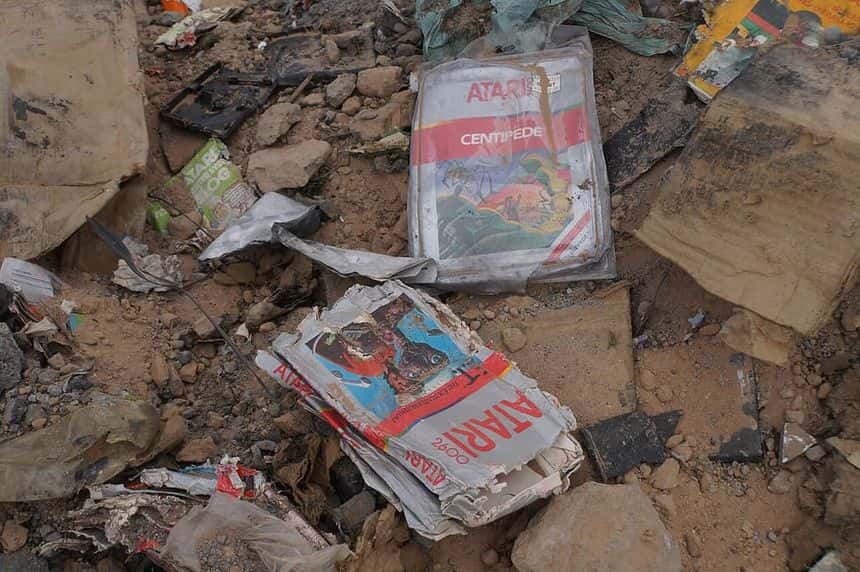
Unverified: Widely repeated unit figures for the Pac-Man and E.T. cartridges (how many were made, sold or returned) and for the number of cartridges buried at Alamogordo could not be traced to a primary source and are left out. The Associated Press described the search as being for “up to a million” copies; about 1,300 games were recovered.2223 Air dates of commercials are the uploaders’ unless stated. The exact date of Raymond Kassar’s appointment is not in our sources; the Times places it just after 1978.1 We did not find a primary source for the outcome of the SEC’s inquiry into the December 1982 share sales and do not state one.
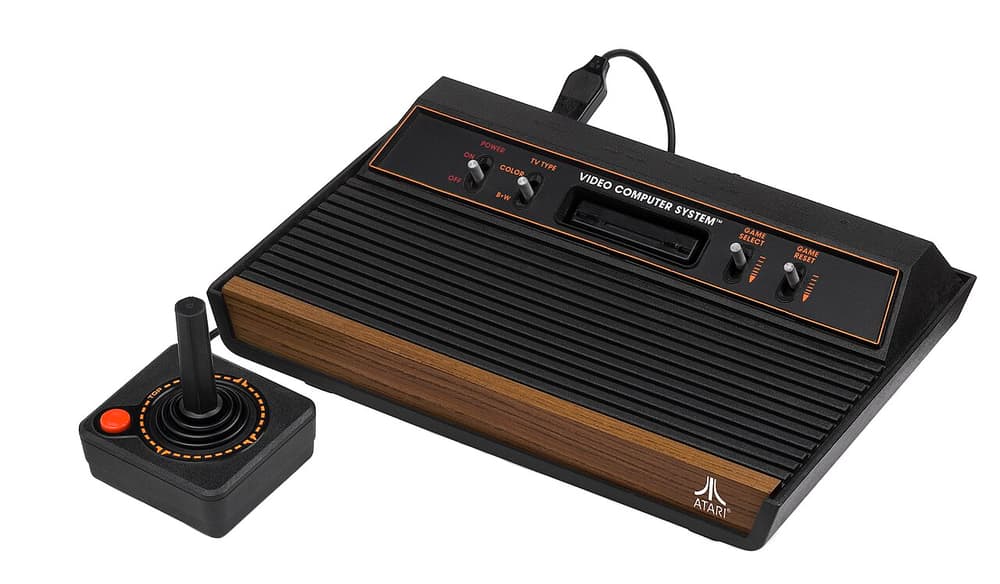
General knowledge: Stated without a citation: Jack Tramiel left Commodore in January 1984; Commodore went bankrupt in 1994; Infogrames Entertainment SA renamed itself Atari SA in 2009 (the 2013 press release describes Atari S.A. as formerly Infogrames18); the Video Computer System was renamed the 2600 in 1982; the coin-operated division Warner kept became Atari Games.
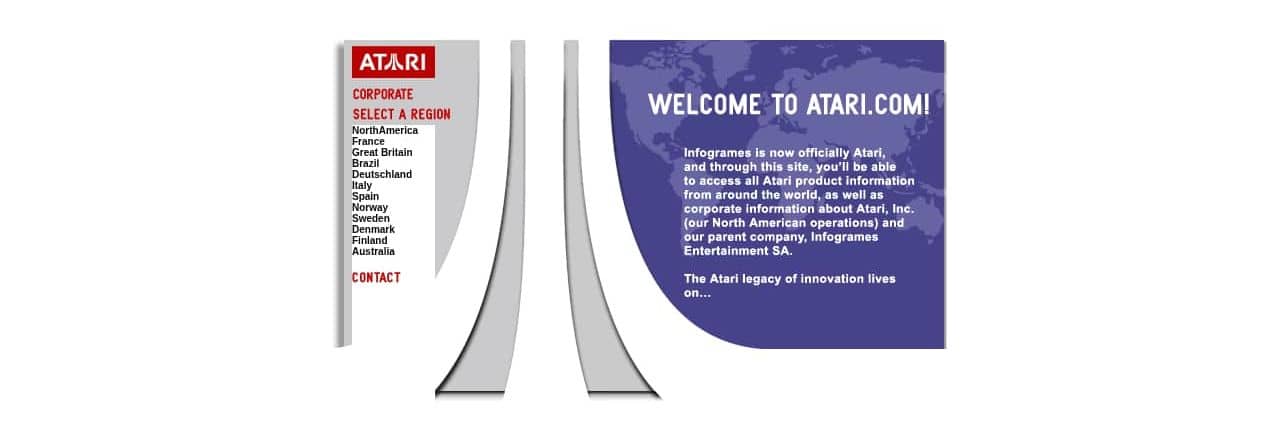
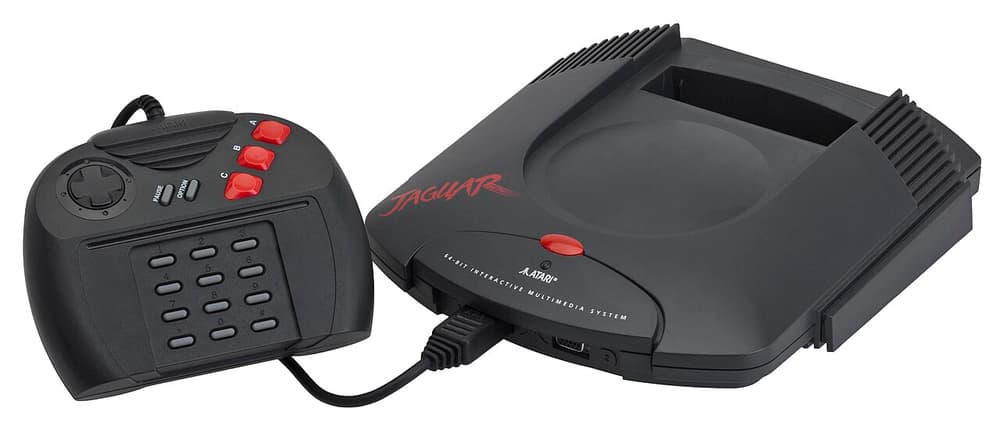
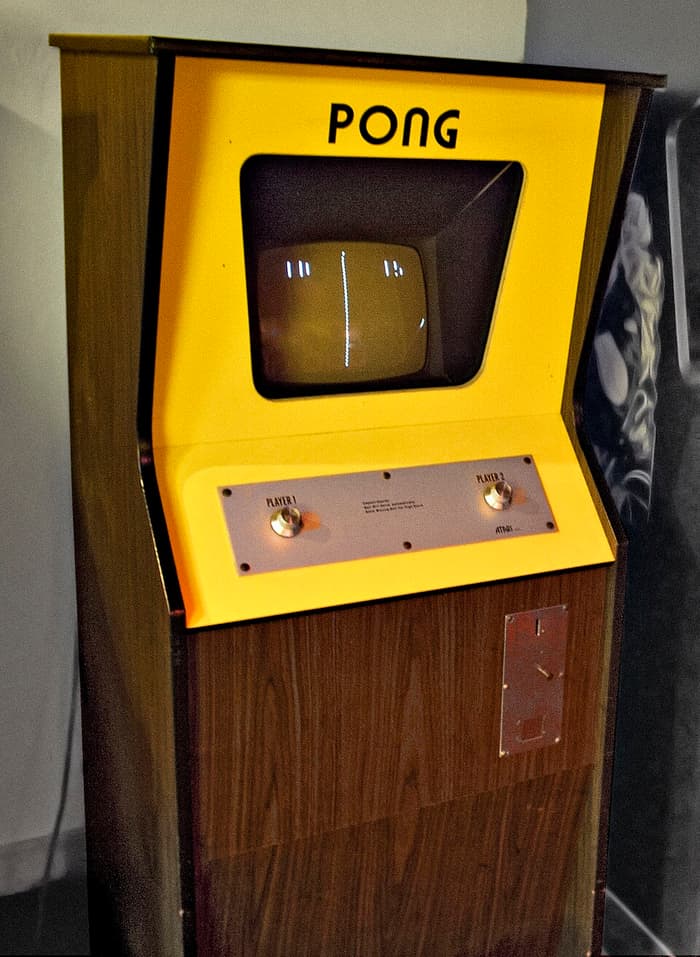
Images: Photographs are from Wikimedia Commons: the 2600 (Evan-Amos, public domain), the Pong cabinet (Rob Boudon and Ubcule, CC BY 2.0), the Jaguar (Evan-Amos, CC BY-SA 3.0) and the Alamogordo dig (taylorhatmaker, CC BY 2.0). Screenshots and logo crops are from Internet Archive captures of atari.com32 and are shown for commentary.